Case study
Sochi 2014 Olympic Winter Games Opening Ceremony
Ross Williams’ lighting programming work on the Emmy-winning Sochi 2014 Olympic Winter Games Opening Ceremony at Fisht Olympic Stadium.
Project details
- Project
- Sochi 2014 Olympic Winter Games Opening Ceremony
- Venue
- Fisht Olympic Stadium, Sochi, Russia
- Production type
- Olympic ceremony / international live broadcast
- Lighting Designer / Lighting Director
- Al Gurdon
- Associate Lighting Designer
- Peter Canning
- Lighting Programmers
- Ross Williams and Mike “Oz” Owen
- Ross’s role
- Lighting Programmer, with a primary focus on key lighting
- Console
- Hog 4
- Award
- Primetime Emmy Award — Outstanding Lighting Design / Lighting Direction for a Variety Special
Key contribution
Ross helped programme the lighting for a complex Olympic ceremony environment where broadcast key lighting, theatrical storytelling and stadium-scale spectacle all had to work together. His role focused on building and refining the key-lighting looks needed to support performers, presenters and large ensemble sequences across a vast, technically layered production.
Project overview
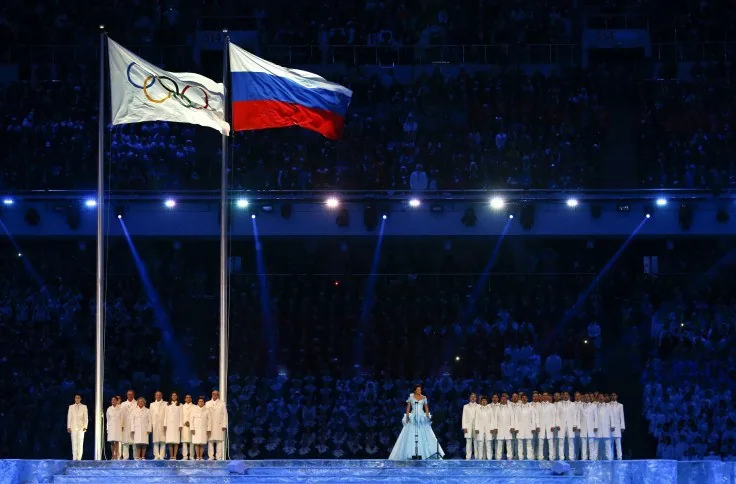
The Opening Ceremony of the Sochi 2014 Olympic Winter Games was an arena-scale live broadcast on one of the biggest stages in the world. Staged inside Fisht Olympic Stadium, the ceremony combined vast scenic automation, projection, aerial performance, audience LEDs and a large-scale lighting rig to tell a visually ambitious story of Russian history, culture, music and Olympic spectacle.
Ross Williams was one of two lighting programmers on the production, working alongside Mike “Oz” Owen under the lighting direction of Al Gurdon. Ross was largely responsible for key lighting across the show, while Mike focused primarily on effects lighting. Although the rig was shared and both roles crossed over throughout the process, Ross operated on a Hog 4 console while Mike worked on a V676, giving the team a flexible programming setup for a technically demanding stadium production.
Programming and broadcast workflow
The ceremonies required weeks of detailed preparation and pre-visualisation in the UK before the team travelled to Russia for an intensive on-site programming period. Once in Sochi, the scale of the task became clear: hundreds of looks had to be built, refined and balanced for both the live audience in the stadium and the international broadcast cameras.
Long overnight programming sessions were needed to integrate lighting with scenic movement, projection, cast choreography, music, camera coverage and the strict cueing demands of a live Olympic ceremony.
For Ross, the project called on a combination of broadcast discipline and large-scale live event experience. The key lighting had to support performers across a huge performance area, maintain consistency for camera, and sit naturally within a constantly shifting visual world — from intimate theatrical moments to full-stadium spectacle.
With audience LEDs, projection, scenic reveals, aerial elements and large-scale lighting effects all contributing to the final picture, every cue needed to be precise, repeatable and ready for a one-time global broadcast.
Technical challenges
The key-lighting work had to sit inside a projection-heavy stadium environment without competing with the scenic storytelling. Broadcast exposure, colour temperature, performer visibility and projection contrast all needed to be balanced across a vast performance area, with lighting looks that could read clearly for cameras while still feeling integrated for the live audience.
The ceremony also demanded repeatable cueing across scenic automation, aerial performance, cast movement, audience LEDs and large-format lighting effects. Ross’s programming contribution focused on making the key light dependable and camera-ready while allowing the wider visual system to retain scale, depth and theatrical impact.
Recognition
The result was one of the most memorable and technically ambitious Olympic ceremonies of its era. The lighting team’s work on the Opening Ceremony was recognised with a Primetime Emmy Award for Outstanding Lighting Design / Lighting Direction for a Variety Special.
Planning a similar production?
Contact Ross Williams for availability and to discuss lighting programming, broadcast lighting control or selected lighting director roles.
Contact Ross