Case study
The BRIT Awards 2026
Ross Williams returned to The BRIT Awards in 2026, taking responsibility for key lighting on one of the most technically ambitious music television productions in the UK calendar.
Project details
- Project
- The BRIT Awards 2026
- Location
- Co-op Live, Manchester
- Production type
- Live televised music awards show
- Lighting Designer
- Al Gurdon
- Production Designer
- Misty Buckley
- Key Lighting / Lighting Operator
- Ross Williams
- Effects Lighting Programmer / Lighting Operator
- Alex Mildenhall
- Lighting Supplier
- PRG
- Key elements
- Key lighting, large-scale fixture management, pre-visualisation, timecode programming, lighting data workflow, live broadcast, artist performance lighting, video and lighting integration
Key contribution
The BRIT Awards is one of the most recognisable names in British music television, but Ross Williams’ role on the 2026 show was not simply about being part of a large production. His work was about making the system function.
Returning to the project after several years away, Ross handled the key lighting for the live show, working within Al Gurdon’s overall lighting design and alongside Alex Mildenhall, who programmed the effects lighting. The production required a detailed, highly organised approach to fixture control, data management, timecode and pre-visualisation, with very little time available once the full set, lighting and video elements were physically in place.
Ross’s role sat at the point where creative ambition, technical infrastructure and live broadcast discipline all had to meet.
Need this kind of lighting systems support for a live broadcast or music awards show? View Ross’s television lighting director work or contact Ross about availability.
Project overview
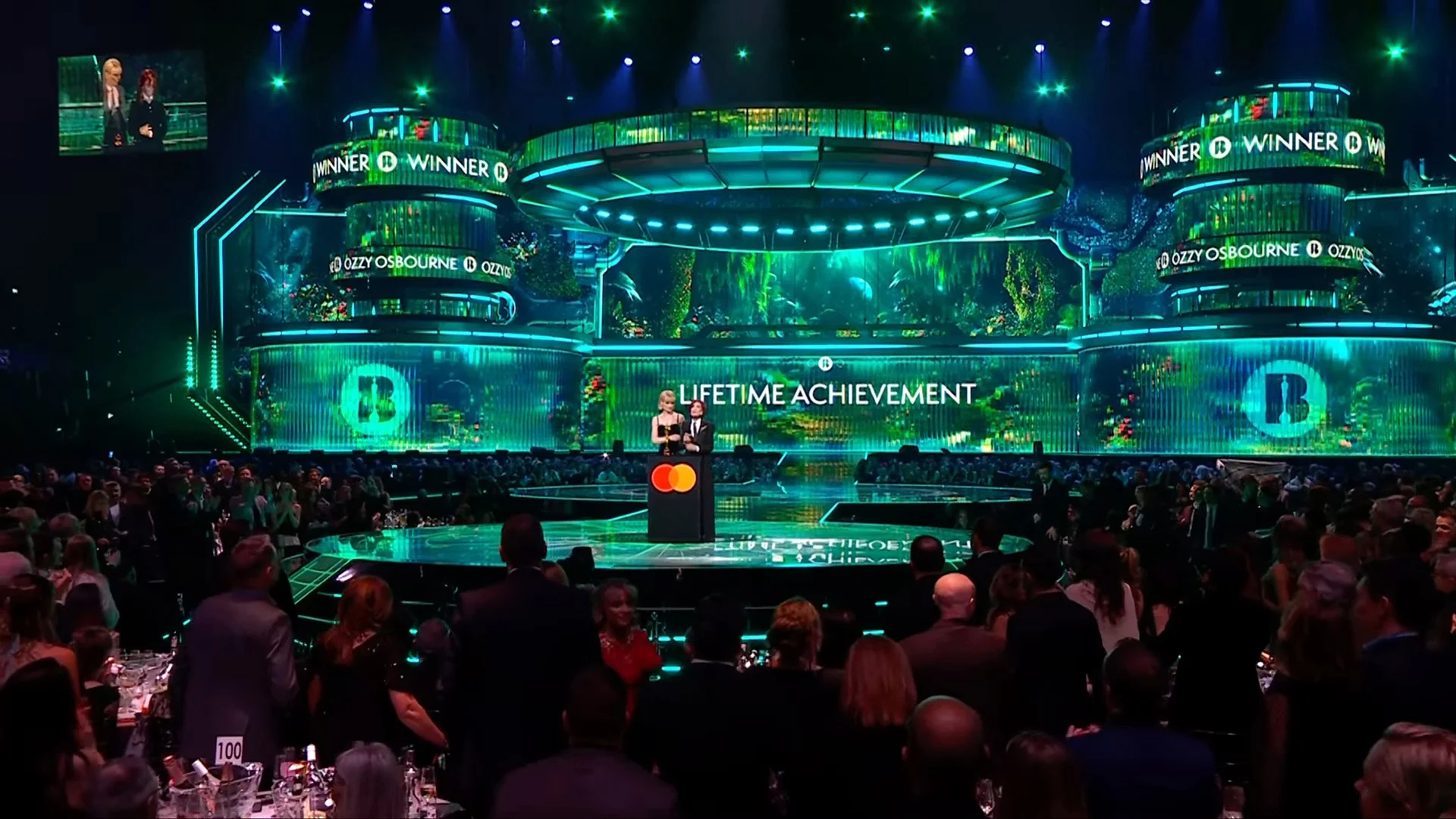
The 2026 BRIT Awards represented a new chapter for the show. Moving to Manchester’s Co-op Live meant the event could not simply repeat an established production model. The set, lighting, video and performance environment had to be rethought for a new venue, a new layout and a new creative language.
The production design created a large, immersive performance environment rather than a conventional single-stage awards setup. Multiple performance areas, large-scale video surfaces, kinetic scenic elements and artist-specific visual treatments all had to work together as one coherent live television show.
For lighting, this created a significant operational challenge. There were large numbers of fixtures to manage, substantial volumes of data moving between systems, multiple creative teams requiring sign-off, and very limited rehearsal time with the completed physical stage.
The work therefore had to be done in advance, in detail and with absolute confidence.
The challenge
The central challenge was time.
The set construction took a number of days, which meant there was only a limited window in which the completed stage, lighting rig, video surfaces and performance elements could be worked through together in the venue. For a show of this scale, waiting until rehearsals to discover problems was not an option.
The team needed to arrive with the show already understood. Fixture positions, key light coverage, camera angles, performance areas, timecode structure, cue timing, video alignment and artist-specific requirements all had to be planned and tested before the final physical environment was fully available.
That made pre-visualisation central to the process.
This was not pre-vis as a presentation tool. It was pre-vis as a working production environment: a place to test ideas, understand coverage, build the show, manage changes and create confidence before the rig was complete.
Pre-visualisation: the how
Ross and the lighting team spent a substantial amount of time in pre-visualisation, using it to bridge the gap between the design intent and the practical demands of live broadcast.
The pre-vis process allowed the team to work through key light positions, camera-friendly looks, cue timing and fixture behaviour before the completed stage was available. This was particularly important because the show involved a highly integrated relationship between lighting, video, scenic automation and artist performance design.
For Ross, the focus was not only on how the lighting looked, but on whether the system would behave reliably under broadcast conditions. Key lighting had to remain consistent, flattering and camera-appropriate, while still allowing each performance to have its own identity. The show needed to move from awards moments to high-impact music performances without compromising the faces, presenters, nominees, artists or live television coverage.
Pre-vis gave the team the opportunity to interrogate those transitions in advance. It allowed the creative and technical teams to understand how lighting would sit against the video content, where key light could be protected, how performance looks would read from camera positions, and where programming or data issues could appear before they became problems on site.
The pre-visualisation system was built around Depence software from Syncronorm, using a hardware setup and dongle supplied by Alex Mildenhall. Ross and Alex merged the two console streams together, giving the team the flexibility to view and programme their individual parts of the lighting rig independently, or to combine the complete lighting system with show video content for collaborative lighting team design reviews.
Managing the fixture rig
A show such as The BRIT Awards carries a huge amount of lighting information. The scale of the rig is not just about the number of fixtures, but about how those fixtures are organised, addressed, controlled and made usable in a fast-moving live environment.
Ross’s work on key lighting required a structured approach to fixture management. The rig had to support the overall show architecture while also allowing individual performances to be shaped quickly and precisely. Every fixture needed to sit within a wider system of control, cueing, timecode and camera requirements.
Key lighting on a live music awards show is a discipline in itself. It has to look effortless on screen, but it must also survive constant changes: presenters moving, artists crossing between performance areas, cameras finding unexpected angles, scenic elements shifting, video content altering the balance of the picture, and rehearsals revealing new creative requirements.
Ross’s role was to keep that foundation stable.
The audience at home should not be thinking about key light. They should simply see artists, presenters and performances clearly and beautifully. That level of consistency is achieved through detailed technical preparation and calm operational control.
Data flow and timecode
The 2026 show involved a massive amount of data moving between lighting, video and playback systems. The lighting team had to ensure that cueing, fixture control and timecode remained aligned across a complex live broadcast environment.
Timecoding the show was critical.
With multiple performances, artist-specific treatments and limited rehearsal time, timecode provided the structure needed to bring the lighting programming into line with music tracks, video playback and production requirements. Ross and Alex Mildenhall both wrote custom scripted mini applications to help manage the data workflow, reduce manual handling and bring the different elements into alignment ahead of sign-off.
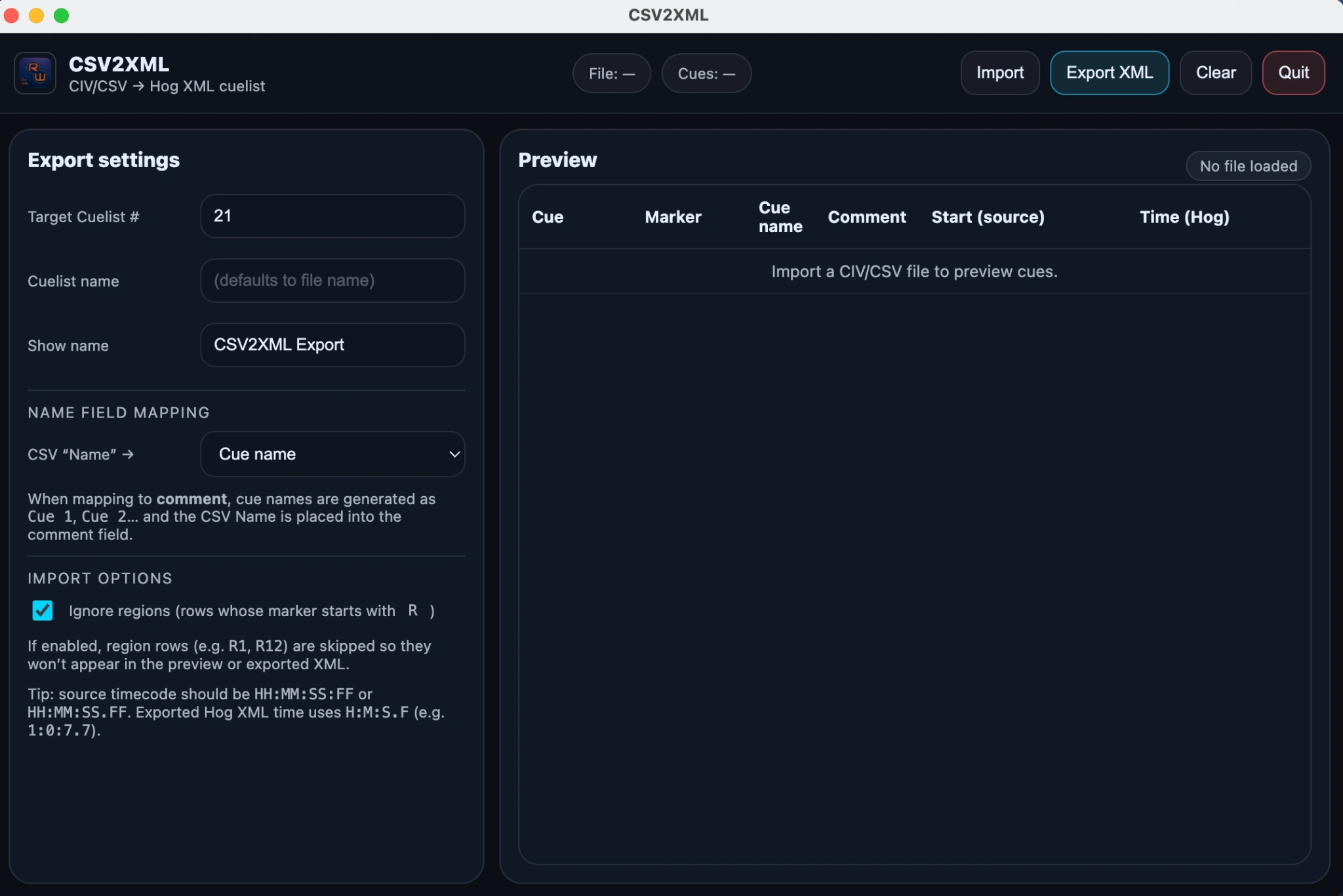
One of those tools was CSV2XML, a compact utility used to convert exported CSV cue point data from Alex’s Reaper project into a Hog 4 XML cuelist format Ross could use directly at the console. Another useful rehearsal tool was LTC+, which helped with timecoded rehearsal playback and is available for free public use on the apps page.
This is where Ross’s contribution went beyond operating a lighting desk.
The job was not only to create looks, but to make the workflow dependable. Custom tools helped organise information, manage changes and reduce the risk of errors across a large and fast-moving production. In a show where many departments and creatives needed confidence in the final output, this kind of technical problem-solving was essential.
The scripting and data workflow work meant that the team could respond more efficiently to updates, bring show elements into alignment and prepare the lighting for review by contributing band creatives, artist teams, record labels and the core production team.
Collaboration and sign-off
The BRIT Awards brings together many creative voices. Each performance has its own identity, often with input from artist creatives, management, record labels, video designers, lighting designers, camera teams, production designers and broadcast production.
Ross’s role required close collaboration across that network.
Working within Al Gurdon’s lighting design, Ross helped translate the key lighting requirements into a practical, programmable and reliable system. Alongside Alex Mildenhall’s effects lighting programming, the team had to ensure that each performance could be delivered with its own visual character while remaining part of one unified live show.
The pre-vis and data workflow became a shared language. They allowed creative ideas to be reviewed, adjusted and approved before the production reached the point where time in the venue became extremely limited. This made it possible for the lighting team to support the needs of contributing artist creatives and record labels while still protecting the technical integrity of the live broadcast.
The result was a collaborative process in which lighting was not simply added at the end. It was part of the planning, alignment and delivery of the show from the outset.
Outcome
The BRIT Awards 2026 required a lighting team capable of handling scale, speed and scrutiny.
Ross Williams’ work on key lighting helped provide the stable visual foundation that the broadcast depended on. In a production environment defined by large fixture counts, major data flow, timecoded performances, complex video integration and limited rehearsal time, Ross contributed the technical structure needed to make the show work.
His return to The BRIT Awards demonstrated not only experience with major televised music events, but the ability to step into a highly complex production and make the system reliable, organised and ready for broadcast.
The finished show may have been defined on screen by performances, artists, set design and spectacle, but behind that was a detailed technical process. Ross’s role was to help turn that process into a working live show.
Need key lighting or lighting systems support?
Talk to Ross Williams about key lighting, music performance lighting, pre-visualisation workflows, custom data tools or large-scale broadcast programming.
Contact RossExplore television lighting direction